Thursday, 24 November 2016

Myanmar – A voyage to the Ancient world

It was a long time aspiration of the history lover in me to visit Brahma Desha, modern day Myanmar; the aspiration became an urge when the country opened up for tourists in the last few years. Lack of interest (of the teenage member) and lack of time (of the adult member) of my family kept deterring my travel plan; but suddenly I found a Messiah in my beloved college friend Anindita who is suffering from acute syndrome of wanderlust. So finally we made a plan for a trip in early November; the tourist season in Myanmar starts from mid-November (after officially the rainy season gets over), so we made a conscious decision to avoid the peak tourist rush, at the same time to get a dry weather. We decided to travel from Kolkata, though my current place of residence is Dhaka, for the simple reason that Biman Bangladesh offered cheaper price from Kolkata for some strange reason (it’s a one stop flight via Dhaka). We planned to visit Bagan, the city of Pagoda for three days and Nyaungshwe Township, famous for Inle Lake for two days; our stay at Yangon was planned one day each on the day of arrival and departure.


We arrived at Yangon International airport in the afternoon, equipped with crisp 100 dollar notes; they refuse to accept notes with even a hint of some imaginary scratch at the Money Changer counters and hotels. The flight was on time, immigration was fast and smooth and our cab driver was waiting with an infectious smile and a placard in our name. At the Money changing counter inside the airport, two of the five notes I supplied got rejected for reason unknown. My friend paled at the prospect, as we didn’t have much excess reserve. On our way to Bagan the next day while trying to encash some more, the same two got accepted while another one was rejected; probably this was a unique method of intimidating the potential fraudsters. 


We booked our hotel-drop beforehand through a local friend, but that was unnecessary, as taxis are in abundance right in front of the airport and for that matter everywhere across the city. The city, on our way and in later occasion appeared to be clean with an oriental touch; the people extremely polite and cordial. In colourful ethnic lungi and a touch of thanka (sandlewood like paste) on cheeks, the ladies looked radiant; there beauty lied in their femininity and natural grace. Our hotel was in Chinatown, carefully selected to be closer to the tourist attractions and also to sip in the local flavour. The choice proved apt, when the Shwedagon Pagoda came in full view with its magnificence, as we entered our 12th floor room. Without wasting much time in the hotel we took a cab and preceded for the Pagoda, famously known as Golden Pagoda, one of the Seven Wonders of the World and the most sacred pilgrimage place in Myanmar (believed to treasure four relics of Buddha, including eight strands of his curls). Originally built during 6th to 10th Century by Mon people, the pagoda reached its current magnitude in 15th Century during the reign of Queen Binnya Thau. By the time we entered the premises after paying entrée fees and clearing security, it was dusk; the Pagoda with full illumination in the backdrop of twilight was a sight I would treasure in my memories for life. The true magnetism of the great Stupa wasn’t in its splendour only; the divinity and peace that hung in the atmosphere was truly mesmeric. We decided to revisit the shrine at dawn on our second stay.

The Pagoda

One of the four center Temples

One of the many small temples surrounding the Stupa

One of the temples facing the Stupa

One more of such magnificence

We travelled by an early morning flight to our destination; the small domestic airport was clean with necessary arrangements; staff were disciplined and helpful though language was a challenge. In Bagan airport, after registering our entry and paying the entrée fee (it goes to the Bagan Archaeological department that ensures no separate entry fee in any of the Pagodas) we took a taxi for hotel at New Bagan. Our driver Mr. Aung Aung turned out to an overzealous chap (even surpassing my own craziness); he not only took a longer root to show us quite a few Pagodas on the way, but also insisted on a series of photo sessions in front of each and every site. The hotel was a resort with lushness of green and aesthetic decors both inside the cottages and outside; the food at their restaurant deserved special mentioning.
Dhamma-Ya-za-Ka Pagoda, dates back to 1198 AD built by King Narapatisithu
One of the Oldest structures shown by Aung
Next two and half days were a ride in a time machine that took us back at least a thousand years. The terracotta Pagodas and temples with faded frescos, weathered sculptures, imposing statues and panoramic terrace views had many tales to whisper in my eager ears; I sailed through, completely immerged in the atmosphere. The Sunset view from Temple terrace overlooking the Old Bagan was also bliss. The visit to the Archaeological Museum was very insightful with stone inscriptions supported by English translations and collections of sculptures and other remnants from the past. The Golden Palace Museum, a replica of the Pagan Royal Palace (completely eradicated with time) was also worth visiting, a sound and music show also takes place in the premises during peak time we were told. Our mode of transport in Bagan was a Tanga (horse cart) falling in line with the atmosphere; the driver Mr. Ku Thet became a friend, though we could hardly understand each other’s language. He showed me the special temple where He and his wife prayed to have a baby after being childless for nine long years, showed me the photo of his infant son; he explained me the significance of the typical structure of the Pagodas. On our way back every day he played soulful love songs in traditional Burmese, the melody reminded of our fifties’ Gold.    
The Thatbyinny built in 1144 AD by King Alaungsithu

The famous Ananda Temple built by King Kayansitha

The majestic Lord in Ananda

From the courtyard

Fresco of Brahma

The Lawkananda Pagoda in the bank of Ayeyarwaddy river

View from the Pagoda

Nanpaya, a Hindu temple built by King Makuta

Scuptures at the temples


Nanpaya

Famous aurches, a characterstics of Pagan architecture


A cluster opposite Mayazedi Pagoda

Mayazedi Pagoda bulit by Prince Yazakumar in 12th Century


A unique Deity inside the temple where our driver prayed for child

The grand gateway of the ancient citadel 

Mahabodhi Pagoda, a replica of the one in Budhgaya by king Htilominlo in 13th century

Bupaya Pagoda at riverside

The temple at Bupaya

Gwadapalin temple built by King Narapatisithu in 13th century

An ancient village with strategically formed Pagodas near Myin Kabar

A closer look

The Archaeological Museum

Collection of weapons

Statues of Lord Buddha

The Golden Palace Museum

One of the gatekeepers of a temple

Rooftop view

Sunset from Shwegugyi


Shwegugyi with the Crescent moon


The Inle lake township is a sleepy place near the lake, surrounded by the mystic mountains; the magical landscape being its attraction. Another early morning flight took us to the Nyaungshwe airport from which the Town was about an hour’s delightful taxi ride. Our hotel was at a quiet corner in the lap of nature, the room overlooked the mountain range. The day we arrived, we went to Red mountain vineyard estate. A wine tasting outlet beside the winery provided a panoramic view of the valley with the backdrop of Lake and Mountain; the sunset from the place was a photographer’s delight, the wine was not that much to talk about though. Next morning we went for a day long cruise on the lake, visiting traditional workshops of silverware, handicrafts, handlooms and cigars; we also visited their fishing villages and a floating garden of vegetables. A hearty lunch of surprisingly delicious lake-fish platter in a restaurant on the lake was an added bonus. The flock of seagulls that welcomed us on the Sun kissed water in the morning and the silhouette of the home going lot at twilight left a mark in my mind to be cherished for long.
A traditional house near hotel

The Vineyard

Sunset from resturant

The fishing village

Heading for market

The Acrobat with his fishing net

The day we came back from Inle to Yangon, it was almost lunchtime; but we decided to forego lunch and visit the War Cemetery at Taukkyan district directly from the airport. It’s a memorial for the soldiers of Colonial British Army who fell in the Burmese frontlines (around 27,000) while fighting the Japanese force. The Cenotaph was written in English, Hindi, Urdu and Gurumukhi; that explained the nationality of the most of the martyrs. Around 4000 gravestones were beautifully laid on the surrounding ground; those were the luckier ones whose graves were marked in the frontline terrain, lot of them unidentified though. Rest of the lot remained as a name, inlaid on the walls of the Memorial. There were registers with the names and identities of the soldiers, available for Public inspection. I left the place with a sense of void and a deep surge of melancholy.
The war cemetery

The grave stones

This time also we stayed in Chinatown and post check in, went to the Strand Road area that reminds of Yangon’s colonial past; for obvious reason I found the place very similar to Kolkata’s Esplanade, though a lot more quieter. The Rangoon Tea house there provided an old world charm with an elaborate menu, a major part of it dominated by Indian delicacies; it signified the massive influx of Indians in erstwhile Ragoon during Colonial Burma. We spent the evening roaming around the area and also doing some shopping from ‘Myanmar House’ a fixed price shop also from the previous era that offered beautiful local crafts, weaves and gems.
On the day of our return, we went to Shwedagon Pagoda for the second time at 5.30 in the morning, witnessing the Shrine at solemn dawn and also in the jubilant morning Sun. I sat at a corner facing the Stupa for a long time, following the quiet worshipers and the meditating monks; it was a different feeling of ecstasy that filled my heart.
Very similar to Writers' Building of Kolkata

The Rangoon Tea House

The Grand Western Entrance of the Pagoda

At dawn

In the morning Sun

A 'just married' couple obliged

A treasure of memories I have carried back from this land of history; ‘a small return gift you owe my friend’ churned in my mind, as the aircraft took off from Yangon; ‘a few stories of your glorious past it would be’, I promised.


***
Copyright (c)ananyapal2016 ALL RIGHT RESERVED 

Monday, 27 June 2016

The Heaven on Earth

The year was 1984; a school girl went for summer vacation in the valley of Kashmir with her parents. It was a sunny morning, the atmosphere very pleasant, as she rode on the Shikara from the back gate of her hotel on the very next day of their arrival. The soft Sun kissing her half face, the rhythmic motion of rowing gently cradling, she was in a slumber until in a magical moment the Dal Lake opened up in front of her eyes. The Molten gold of the water adorned with lotus and water lily contrasted the cool green of Chinar trees lined up on the bank, delicate Kashmiri girls rowing flower boats smiled adorably; ‘I will come back again, once grown up’ she muttered under grasped breath. ‘The heaven on Earth’ was the tittle of the first travelogue she ever wrote.

***
“Agar firdaus bar roo-e zameen ast,
Hameen ast-o hameen ast-o hameen ast”.
---- Amir Khusro
‘If there is a heaven on earth,
It is this, it is this, it is this”.

This June, after many years of patient waiting, I went back to Kashmir to fulfill my promise. It was a seven day leisure trip, with no particular agenda; the idea was to enjoy the divine beauty of the valley and relax. The itinerary was made to suit the idea. We arrived in an afternoon from Kolkata via Delhi and soon realized all our mobile numbers except one were inactive (prepaid numbers don’t work in Kashmir); I breathed a sigh of relief, though the other two members griped, especially my teenage daughter was almost ready to take a return flight to Delhi.
We were booked for the first night in a house boat run by the Welcome group. The houseboat was in Nagin Lake, a bit away from the main tourist congregation of Dal Lake. After the initial excitement of water taxi (our very own Shikara) and the grandeur of the house boat, we settled down at the veranda with a pot of Kawa (Kashmiri tea). It was then, that the mesmeric memory of long past came back again like a cherished dream. The serene lake with a tinge of saffron in the twilight was stretched across the horizon, ultimately surrendering at the feet of its meditating Lord, the mighty Himalaya; the absolute silence spread its splendor befitting the magnificence. Hours passed by, I sat motionless; my mind empty yet ecstatic.
View from Houseboat in the twilight

Next day morning, the fire globe rose above the mountains flaming the eastern sky; the Lord withdrew himself in obscurity. Nagin Lake like a dazzling mermaid danced around in her Golden splendor; kingfishers and seagulls kissing her in admiration.
It was time again to move, I whispered ‘Goodbye’ to the celestial maiden caressing the water from the shikara.
The morning view

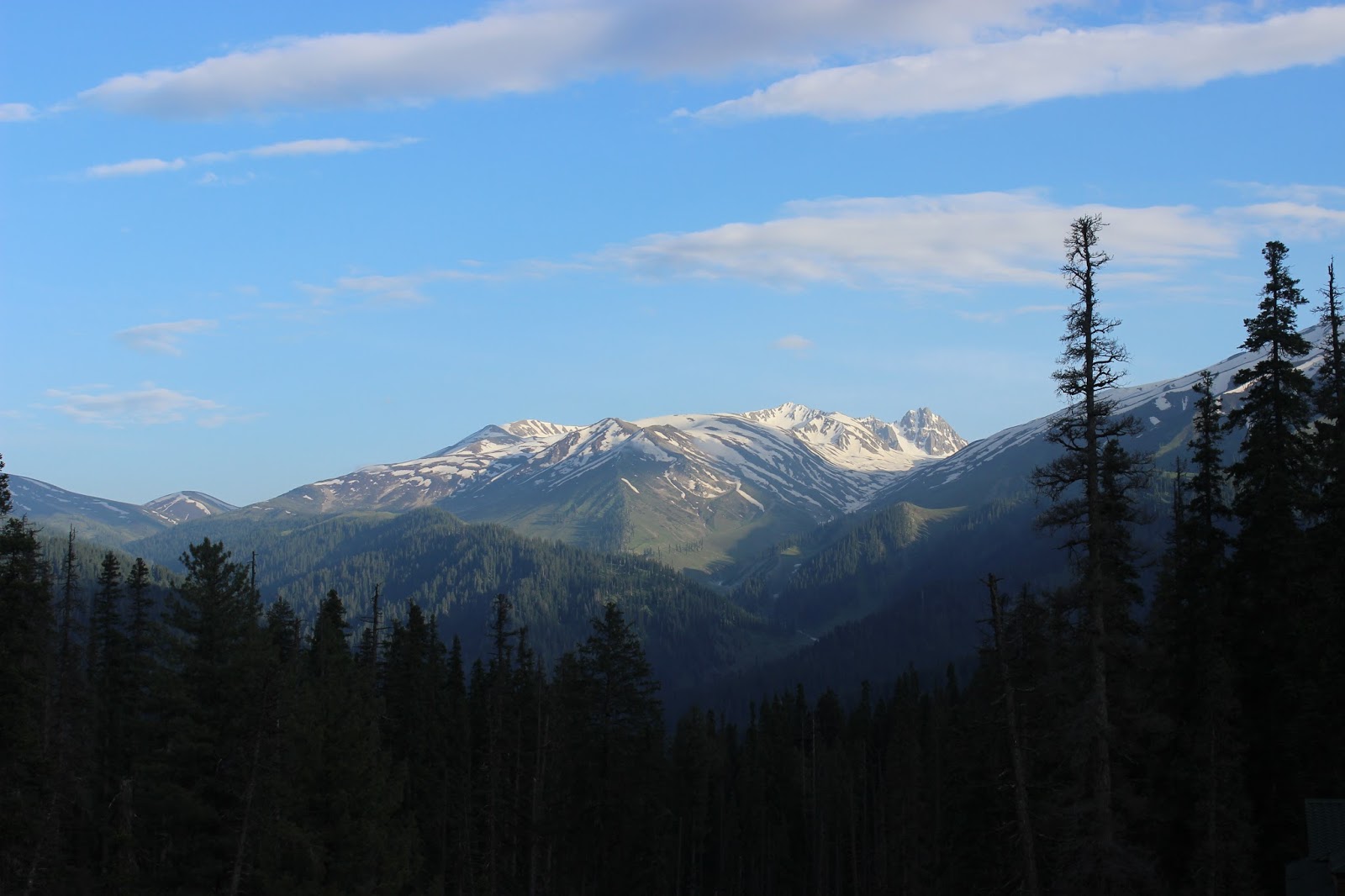
Our next destination was Gulmarg, which took about two hours by road from Srinagar; we had arrangement for one night stay there at a resort on the uphill of the Gondola station. We weren’t too keen on the Gondola ride to the top of the glacier, but zest of our driver Hilal Bhai was indomitable; we succumbed at the end. The ride to the top was enjoyable, if one can ignore the tourist rush, the view at top was absolutely breathtaking. Still, I won’t recommend this to those who have already visited Jung Fro and Mt. Titlis in Switzerland. We checked in the resort at around 3 pm, the snow caped mountain patterned with deep pine green from the window view took away all the fatigue and irritation of the Gondola adventure instantly. Instead of late lunch, I settled for a high tea, the open air coffee shop midst the mountains being the sole reason. The evening was well spent on taking a steep walk on the hill, shadowed by the tall pines and bubbly streams. We could do full justice to the elaborate buffet dinner at the end.
View from top
View from top

View of the cable station from uphill

As pre-decided, I and my husband went for a long walk towards the valley quite early in the morning. The lonely road, the pristine landscape, sweet note of birds offered me a memory of life time.


From Gulmarg we proceeded towards Pahelgam; that was to be our abode for next two nights. My husband asked me while planning for the trip, which were the places that moved me most in my previous trip; ‘Dal Lake and Lidder River’, was my instant answer. As the first glimpse of Lidder appeared parallel to the road approaching Pahelgam, I travelled in a time machine; trying to find out a particular spot at the valley, a certain turn on the river, it was absolutely childlike. In Pahegam the resort in which we stayed was spread across the hill overlooking Lidder River; there was view of it even from our cottage room. The well kempt garden of the resort lavished with various roses and sitting arrangements at strategic points was my refuge for the next two days. Sitting by Lidder, writing came spontaneously; I indulged on romancing with history. We took a short trip to Betab valley on the second day based on strong recommendation and certainly didn’t regret it. A portion of the valley along with the river was fortified to make it an enjoyable tourist point without tampering with the nature.
It was a sense of loss that moistened my eyes at the time of bidding farewell to Lidder, she travelled along for some time before sending us off.
View from resort

View from our resort

The river bed

Another view from resort


Betab Valley

Betab Valley

Bloom in the grass


On the way to Srinagar, we stopped by on the National Highway to visit the Avantipura ruins; that had a cluster of temples built in 9th Century AD by King Avanti Varman. The Central temple was of Lord Vishnu in his eternal sleep; though dilapidated, the structure invoked awe with its majesty and intricacy of carved walls.


This time in Srinagar, we stayed at ‘The Lalit Grand Palace’, a palace turned hotel, former residence of Maharaja Hari Singh. We stayed there for three days, away from the hustle bustle of the City Centre, right in the lap of nature. The property had huge garden, so well nurtured that it can put even Nishad garden to shame; the green pasture, the imposing pine forest at the backdrop and the Dal Lake in view created a sense of vastness truly regal. Sitting for hours at the early morning and in the romantic twilight on the grass lawn, looking at the Dal Lake and the Pines had been a great indulgence; there gentle breeze often kissed my curls, silence appeased my engaged mind, I sipped the wonder of nature.
At the hotel
Hotel lawn
We went for Shikara ride one evening on Dal Lake and the next morning on Nagin Lake for a longer one. In Nagin Lake, we were the only tourist enjoying the serene landscape and exploring the beautiful alleys midst floating gardens and waterlily blooms. Pari Mahal, an eight layered garden built by Prince Dara Shiko, Chashme Shahi, Nishad Garden and Akbar Fort were few sites we visited in between.
Pari Mahal
Nagin Lake on Shikara ride
Nishad Garden

Akbar Fort
Chashme Shahi
The floating market at Dal Lake

After seven days of sheer bliss we left Srinagar with heart full of memories and bags full of shopping. It is said that a shrine is generally visited twice in a lifetime; like that I completed my cycle of visiting the paradise twice in my lifetime; happy and fulfilled now I would relish the nostalgia for the rest of my days.

***


All photographs of this blog are personal property of Mr. Dilip Pal. Copyright (c)dilippal 2016
Copyright (c)ananyapal2016
ALL RIGHT RESERVED